
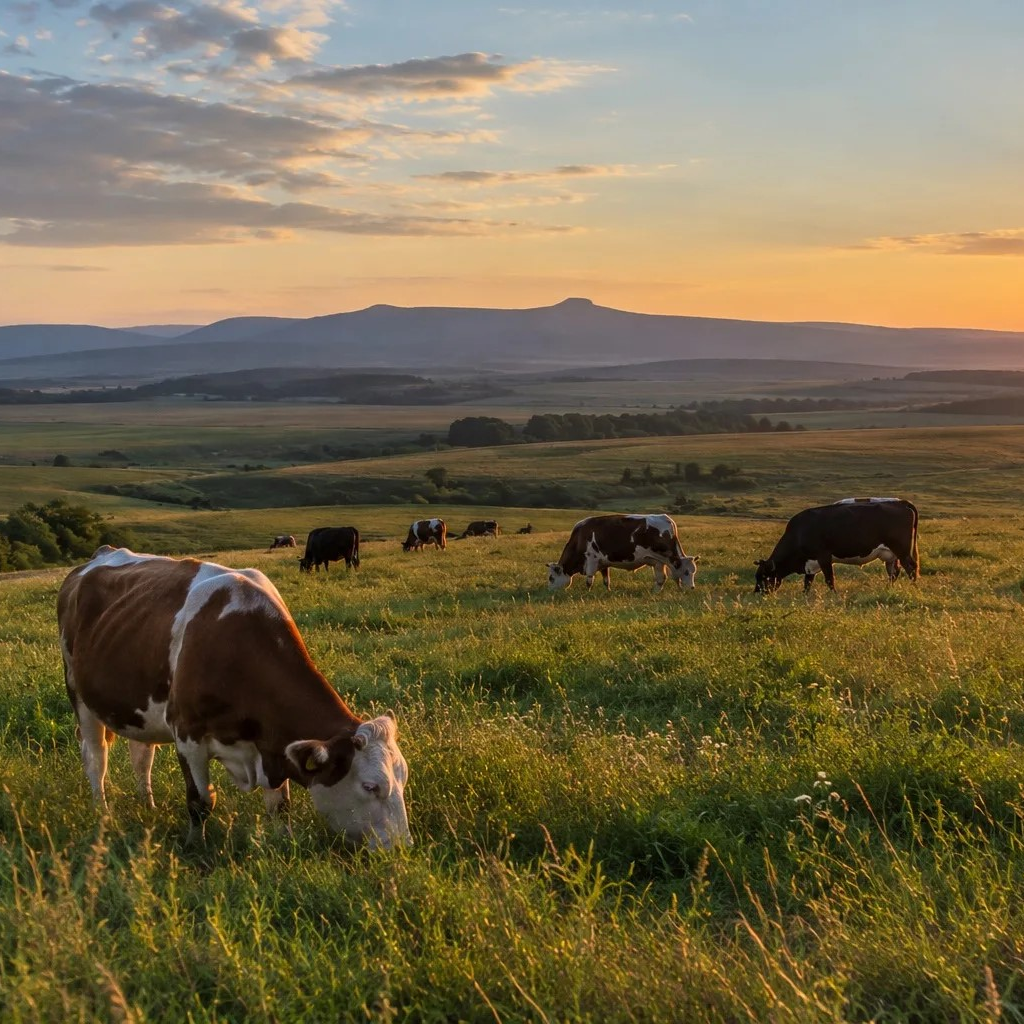
A group of Russian scientists assessed the content of potentially hazardous chemical elements in the soils and vegetation of natural pastures in the northeast of the Stavropol Territory. The study did not reveal soil contamination with heavy metals and arsenic.
The work was carried out in two areas — within the Chogray‑Caspian and Chogray‑Ragulsky landscapes. The scientists examined the top 20‑centimeter layer of soil and various types of herbaceous plants. The samples were analyzed to determine the content of cadmium, cobalt, chromium, copper, nickel, lead, zinc, and arsenic.
The researchers paid particular attention to how actively these elements moved from the soil into the plants. To do this, they calculated the transfer coefficient and determined the relative bioavailability of the substances. Arsenic and chromium moved least actively into the plants, while zinc and cadmium exhibited the highest bioavailability.
This assessment allows for simultaneously characterizing the state of the soil and monitoring the behavior of chemical elements in the «soil–plant» system. For natural pastures, this has practical significance, since vegetation is part of the feed base for farm animals.
«For the agro‑industrial complex, it is important not only to use land resources efficiently but also to constantly monitor their condition. Maintaining the fertility and ecological stability of soils is directly linked to the long‑term potential of agriculture and the food security of the region. Therefore, a systematic study of the condition of the land should be part of the scientific support for the development of the agro‑industrial complex, ” noted Vladimir Sitnikov, rector of Stavropol State Agrarian University.
The study was conducted by scientists from the National Research Center «Kurchatov Institute, ” Lomonosov Moscow State University, and Stavropol State Agrarian University. Stavropol State Agrarian University was represented by Valery Tskhovrebov and Dmitry Kalugin.
The research results were published in the highly rated scientific journal Eurasian Soil Science, published by Springer Nature.