
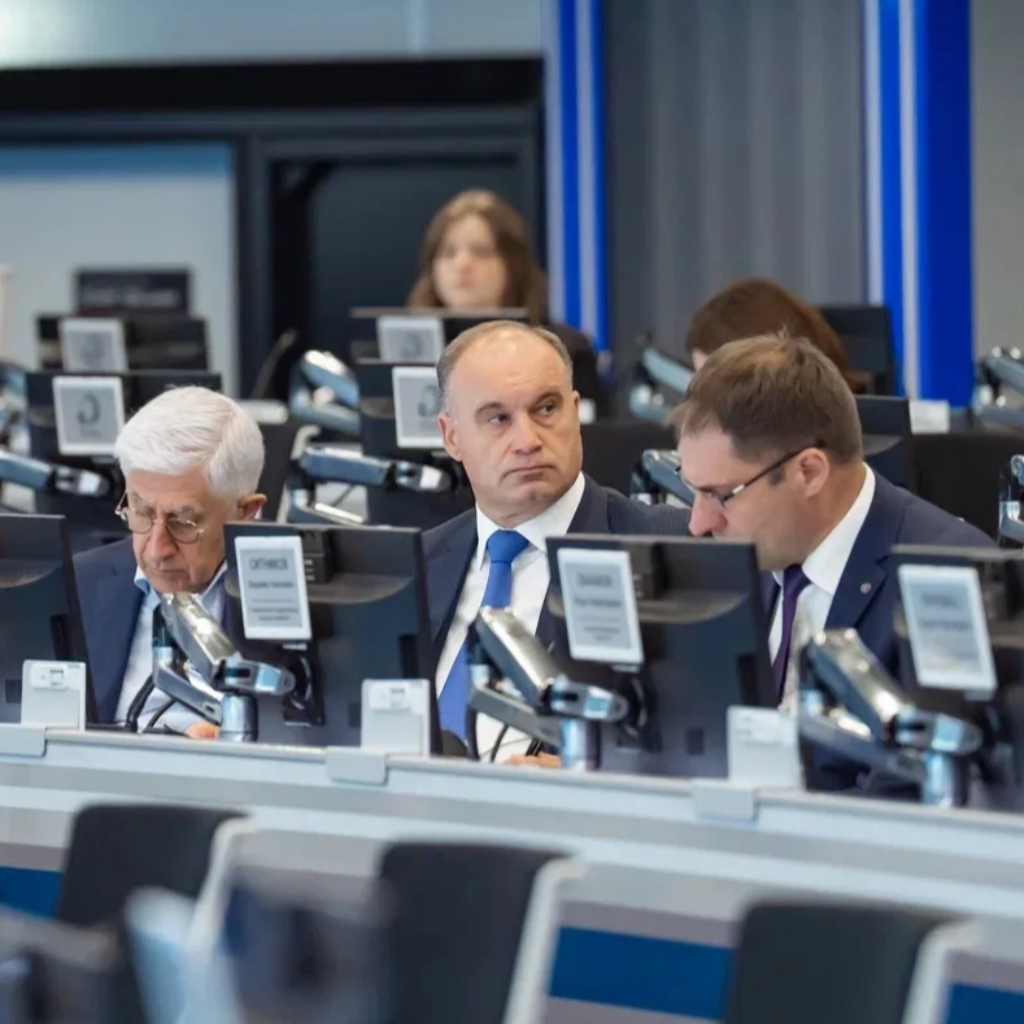
Vladimir Sitnikov, Rector of Stavropol State Agrarian University, presented to Valery Falkov, Minister of Science and Higher Education of the Russian Federation, the results of admissions to educational programs implemented as part of a pilot project to change the levels of professional education. The report was delivered at a working meeting of universities participating in the pilot.
This academic year, StSAU became the first agricultural university in the country to conduct admissions to the pilot programs. In total, the project includes 36 of the university’s educational programs aimed at training specialists of a new level for the agro‑industrial complex.
To implement the pilot project, Stavropol State Agrarian University developed four of its own educational standards for the consolidated groups of specialties «Agriculture, Forestry and Fisheries» and «Veterinary Medicine and Animal Science». These standards take into account the current requirements of the industry, the needs of employers, and the need to strengthen students’ practical training.
At the level of basic higher education, one of the features of the new model is the introduction of a discipline aimed at developing scientific thinking as early as the first year. The opportunities for choosing disciplines have also been expanded, the acquisition of working professions is provided for, and the volume of practical training has been increased by 30–40 percent. This approach allows students to immerse themselves in the professional environment earlier, acquire practical skills, and build an individual educational trajectory.
The changes have also affected postgraduate studies. Stavropol State Agrarian University has implemented a model with academic and production tracks. For each postgraduate student, an individual scientific training trajectory is defined. When choosing the production track, an industrial mentor from a relevant enterprise is added to the academic supervisor from the university. This makes it possible to link research work with real production tasks and increase the applied significance of scientific projects.
Next year, the university plans to expand its participation in the pilot project, increase opportunities for teachers to complete internships at agro‑industrial enterprises, and involve more industry specialists in the educational process. This will strengthen the university’s ties with the real sector of the economy and ensure the training of personnel taking into account technological changes in the agricultural sector.
In addition, at the request of the Ministry of Agriculture of Russia and the Ministry of Education and Science of Russia, StSAU will participate in the development of four federal state educational standards for new specialties in the field of breeding and genetics of agricultural animals and plants. These areas are of strategic importance for the development of the domestic agro‑industrial complex, strengthening the country’s food security and technological sovereignty.
«Our task is to identify a student’s abilities and interests as early as possible, to help them determine their professional trajectory, and to do so from the very first year of study, ” noted Vladimir Sitnikov, Rector of Stavropol State Agrarian University.
Stavropol State Agrarian University will continue to develop pilot educational programmes, strengthen partnerships with industry enterprises, and participate in the formation of new federal educational standards. Implementing the pilot project will enable StSAU to strengthen practice‑oriented training, develop research and production tracks, and consolidate the university’s role as one of the key centres for updating agricultural education in Russia.