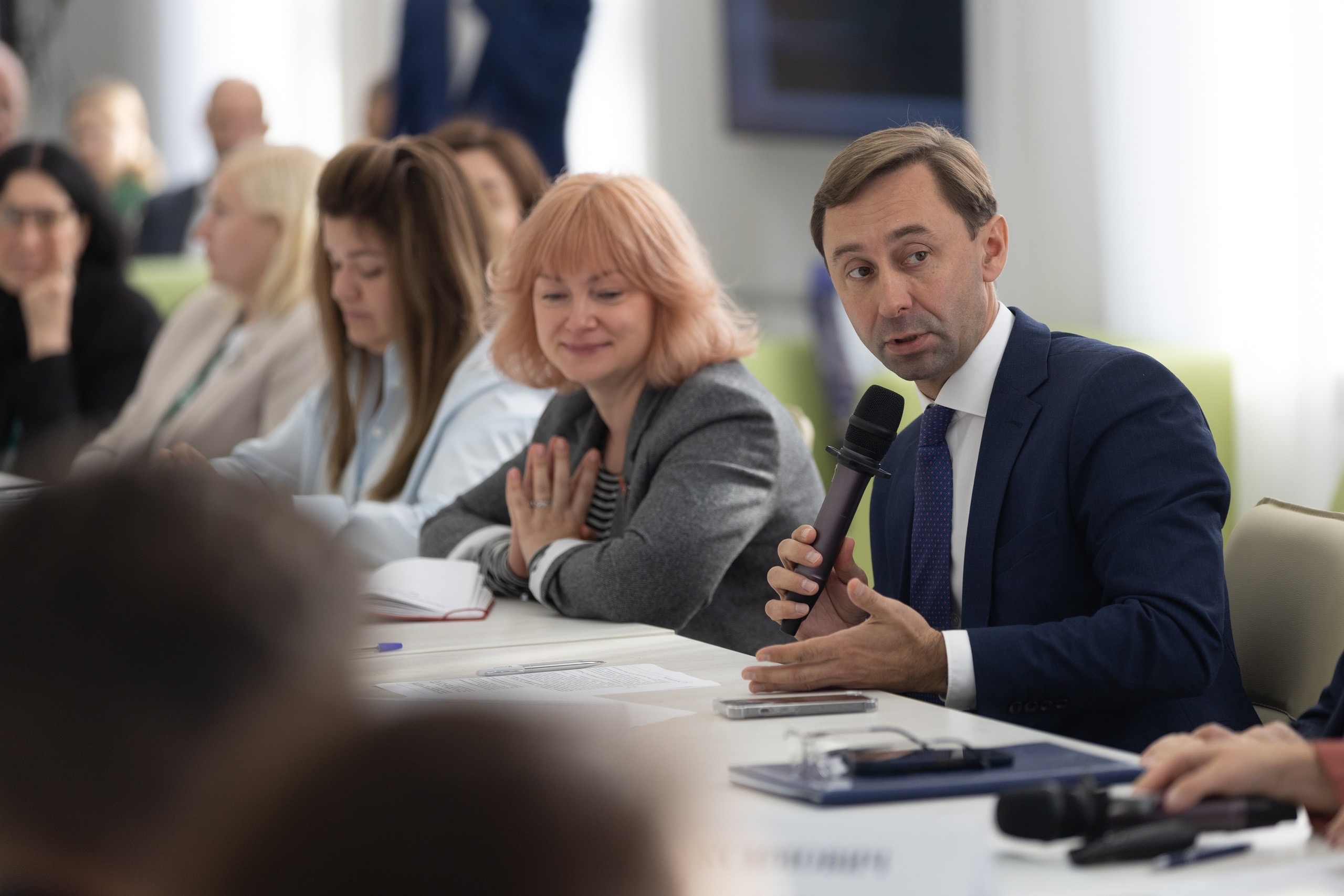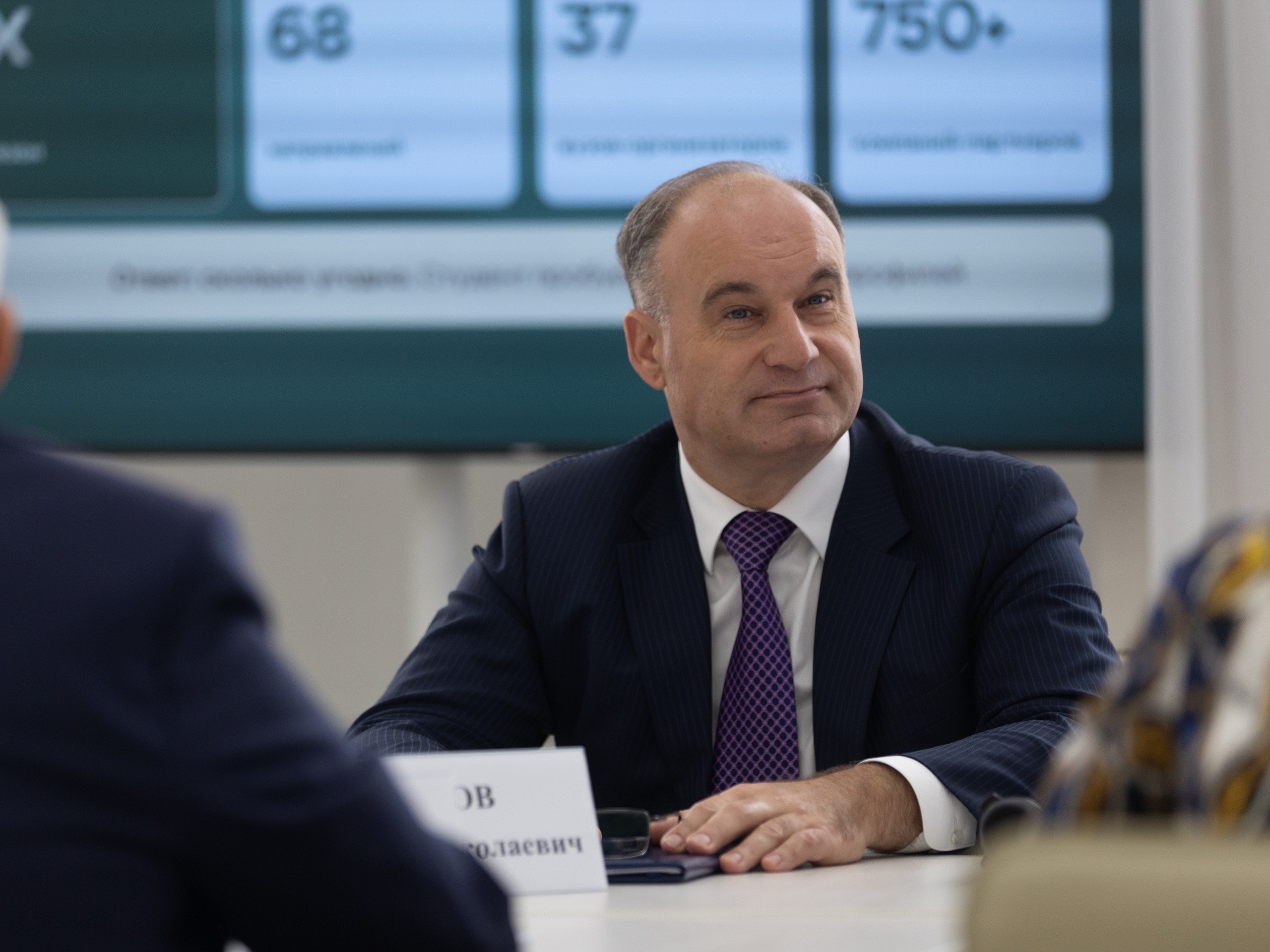
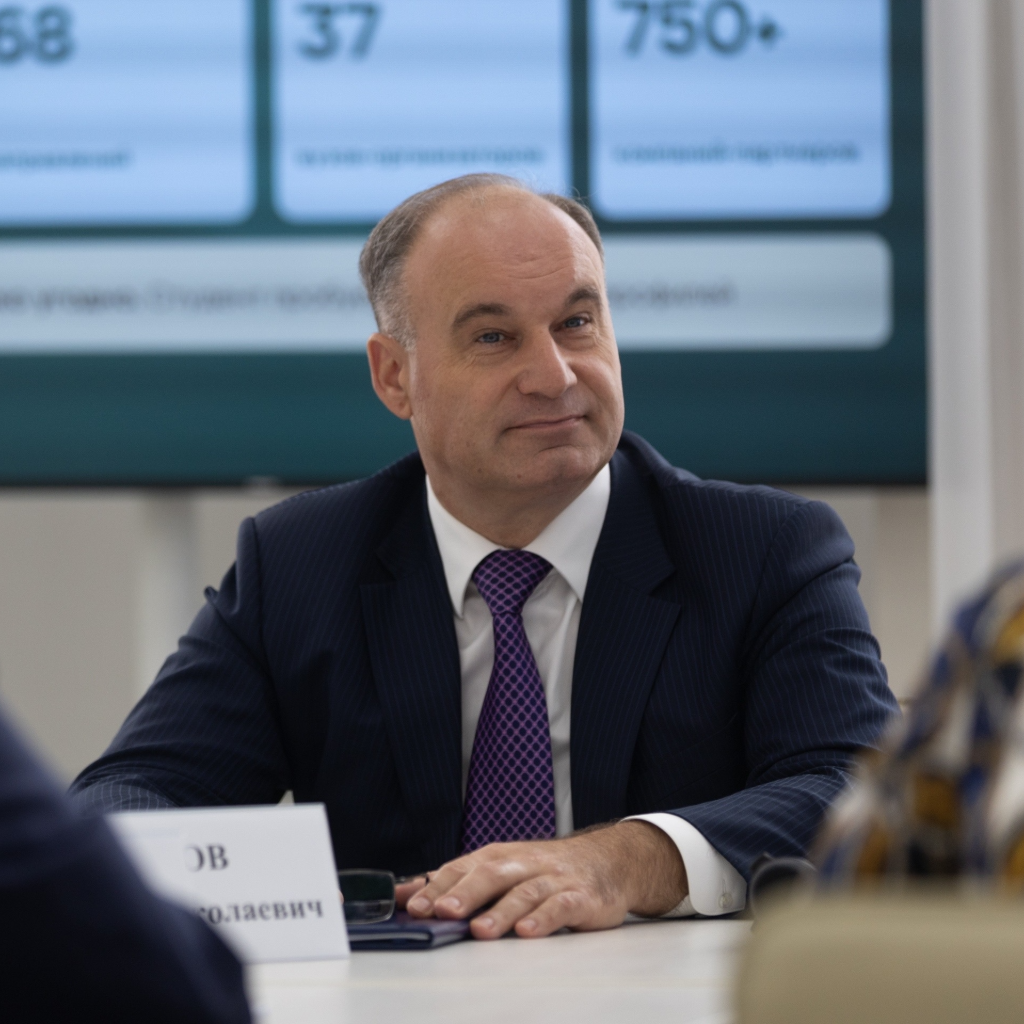
Vladimir Sitnikov, Rector of the Stavropol State Agrarian University, spoke at the roundtable «New Education System in the Agro‑Industrial Complex: Approaches and Testing, ” which took place in Moscow as part of the Russian Agro‑Industrial Exhibition „Golden Autumn.“ The participants discussed personnel training within the framework of a pilot project aimed at changing the levels of professional education in Russia.
The discussion was attended by representatives of the Office of the President of the Russian Federation for Science and Education Policy, the Ministry of Agriculture of Russia, the Ministry of Education and Science of Russia, agricultural universities, as well as universities participating in the pilot project. StSAU became the only agricultural university in the country among the 17 participants in the project implemented at the initiative of the President of Russia.
Since January 2026, the university has carried out extensive analytical work: 616 curricula in the fields of agriculture, veterinary science, and zootechnics were studied, the Soviet experience in training specialists and conducting final assessments was analysed, and foreign practices were summarised. As early as this academic year, 30 percent of StSAU’s educational programmes are being implemented as part of the pilot project.
The interest in the updated format is confirmed by the results of the admissions campaign. Enrollment in targeted places has doubled, and enrollment in paid studies has increased by 20 percent. This indicates the demand for the new model both among applicants and among employers in the agro‑industrial sector.
The key principle of the transformation is the close connection between theory and practice. The new model allows students to master a working profession starting from their first year, in parallel with the main educational program. Future processing technologists can obtain a qualification as a cheese maker, agronomists — as an operator of unmanned aerial systems, hydromeliorators — as an inspector of hydraulic structures, and agroengineers — as a welder or a mechanic for repairing agricultural machinery.
The volume of practical training at enterprises is increased by 30–40 percent. Professional training is focused on the real tasks of the industry: organizing work, diagnosing equipment, assessing the efficiency of technological processes, and using modern tools in production conditions.
The system for assessing learning outcomes is also being changed. Starting from the 2027/28 academic year, students will solve practical cases and demonstrate professional skills during exams. This approach will make it possible to assess not only knowledge of theory but also graduates’ readiness to apply it in real‑life situations.
Special attention is paid to postgraduate studies. At StSAU, alongside the academic track, a production track is being developed, within which the dissertation topic is formed taking into account the tasks of a specific enterprise. In this case, a practicing mentor from the company joins the university’s academic supervisor, which strengthens the connection between research and the real sector of the economy.
Following the roundtable discussion, a resolution was prepared on the dissemination of Stavropol State Agrarian University’s experience in other agricultural universities under the Ministry of Agriculture of Russia. The first results of the new model can be assessed within a year, and the first graduates of the updated programs will enter the labour market in four years.
«The domestic education system has entered a stage of gradual but profound transformations, and Stavropol State Agrarian University is at the forefront of these changes. Our goal is to gather the best practices of agricultural and other universities and to develop approaches to training specialists that will serve as a benchmark for the entire industry.» The main principle of transformation is a close connection between theory and practice. We are creating a model in which education will not only meet the demands of the agro‑industrial complex but also anticipate them, providing students with in‑demand competencies, a vocational profession from the very first year of study, and the opportunity to apply their knowledge in real‑world production, ” said Vladimir Sitnikov, rector of Stavropol State Agrarian University.
Stavropol State Agrarian University will continue to develop pilot educational programs, expand cooperation with employers, and strengthen students’ practical training. The experience of Stavropol State Agrarian University in transitioning to a new model of higher education will become the foundation for updating agricultural education and training a new generation of specialists for the Russian agro‑industrial complex.